The Playbook Companion
You’ve got the book.
Let’s press record.
A little less overthinking. A little more doing.
If The Video Podcasting Playbook for Professionals brought you here, you’re in the right place. Pick up a practical tool, find your next step, and keep climbing.
Free companion tools. No account or email required.
New to the book? Get your copy on Amazon
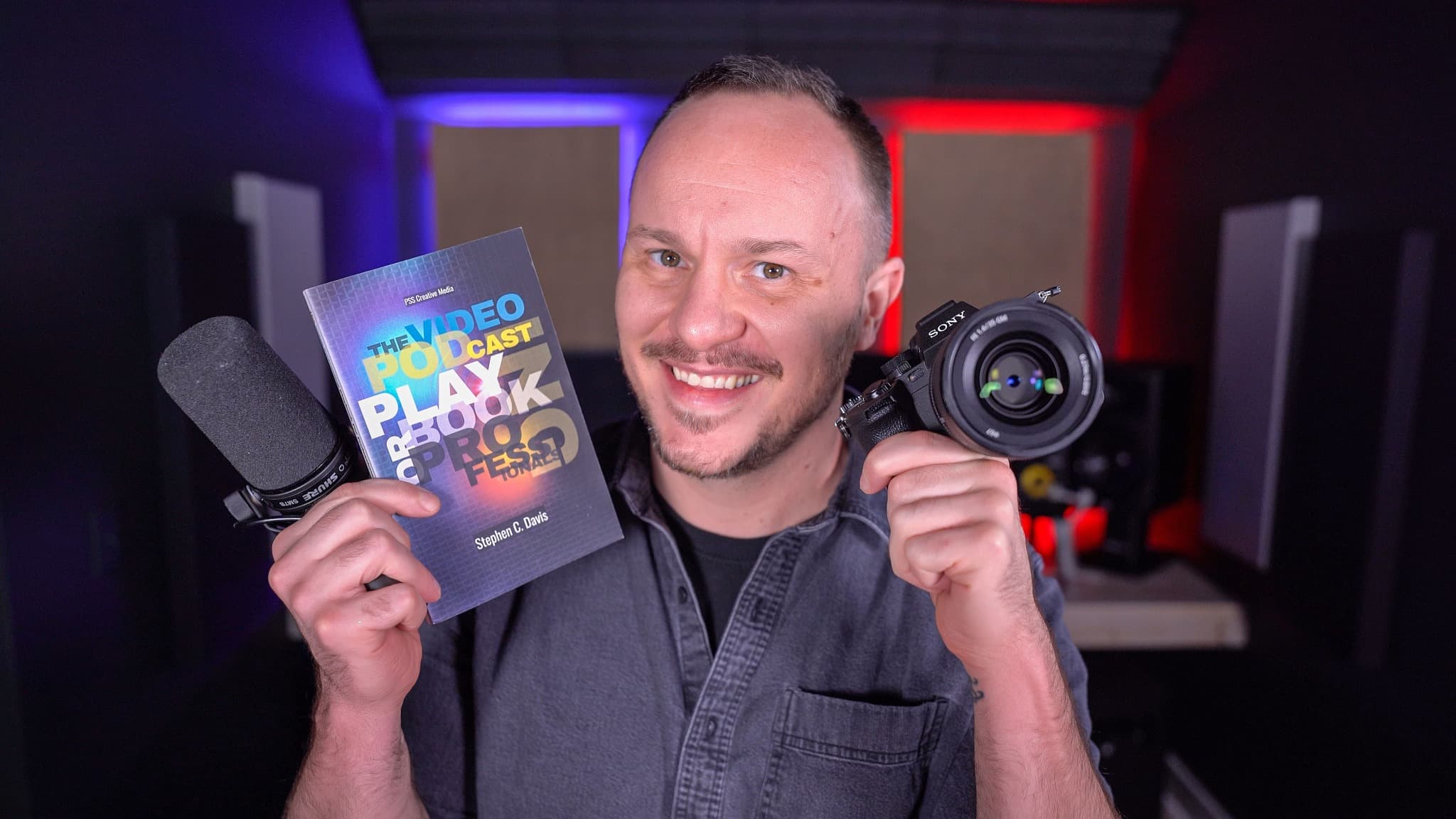
Start here · Chapter 4
Your first episode
can start right here.
The 3T worksheet turns your title, topic, and trailer into a simple introduction to your show. Answer a few prompts, make the words your own, and read them out loud.
No big production. Just a clear reason to listen.
An editable starter based on Chapter 4 · Copy or download your draft
Keep your place. Find your next step.
The tools, by chapter.
Start with the part you’re reading.
You don’t need to do it all today.
Chapters 1–4
Focus
Your why. Your people. Your first 12 episodes.
Your why, your people, your promiseTurn the big idea into a show with a clear purpose.
- Write the change you want to help someone make: “I’m committed to ___ so that ___.”
- Describe one listener: their situation, the thing they’re struggling with, and what they want next.
- Try a personal name, a concept name, and a hybrid. Choose a direction you can test for 12 episodes.
- Write your brand promise: “I help ___ do ___ so they can ___.” Give it a RICO check: relatable, inclusive, caring, outstanding.
Adapted from the chapter’s action steps
Make a date with your first 12 episodesA manageable launch, with room to learn along the way.
- Put a short practice recording on the calendar. Use the camera you already have.
- Choose the date for your first official recording and a realistic launch date.
- Prepare the basics: title, short description, cover art, three finished episodes, a host, and one place to announce the show.
- Map 12 episode ideas. Add a recording date and a release date; leave room to adapt after feedback.
Adapted from the chapter’s action steps
Chapters 5–7
Adaptive
A setup you can use. One improvement at a time.
The press-record checkGet the room, the recording, and yourself ready.
- Listen to the room. Reduce avoidable noise and echo; position the mic and make a short playback test.
- Check your framing at eye level, lighting, power, available storage, and the selected camera and microphone.
- For a remote guest, check headphones, sound, framing, and the recording platform together.
- Take a breath, loosen your shoulders, and record a short warm-up. Confirm that the real recording has started.
- Before packing up, play back the file and confirm it saved. Let any required uploads finish.
Adapted from the chapter’s action steps
Three people. One useful improvement.Get specific feedback without rebuilding your whole show.
- Choose three people with useful, different perspectives: a supporter, a candid critic, and a knowledgeable peer.
- Ask what was most engaging, what was confusing or slow, and what one thing they would change.
- Compare their notes with what you noticed when watching the episode. Look for repeated patterns.
- Pick one or two changes for the next recording. Write down what happened when you tried them.
Adapted from the chapter’s action steps
Chapters 8–10
Scalable
Give every recording a little more room to travel.
One recording, a little more reachPlan the full episode, a highlight, and one short clip.
- Research: choose the audience question this episode will answer.
- Outline: write the title, two subtopics, a hook, and one invitation for the viewer.
- Record: capture the episode, then a separate hook, call to action, and optional behind-the-scenes moment.
- Edit: finish the main episode, pull one useful highlight, and choose one short vertical excerpt. Save the transcript.
- Distribute: choose release dates and an owner for each piece. Add a newsletter or article only when the core workflow feels manageable.
Adapted from the chapter’s action steps
Find and brief your first editorA clearer audition, a smoother handoff, a better partnership.
- Explain the audience, the show’s purpose, and how you want the finished episode to feel. Share a style reference.
- Agree on a small paid test with a clear scope, deadline, deliverables, and fee. Supply a short clip and three or four specific instructions.
- Review the edit and the communication. Include an agreed revision so you can see how you work together.
- Set up a regular check-in. Agree on file names, shared folders, handoff dates, and who approves and publishes.
- If one person will also distribute content, specify that work separately so the expectations are clear.
Adapted from the chapter’s action steps
Chapters 11–13
Tactical
Make the next change a thoughtful one.
Before you add cameras, or go liveMake the production plan before you add more moving parts.
- Name the problem you’re solving. Is another camera or a live workflow the right next change?
- Map the camera angles, microphones, monitoring, switching, recording, and file handoff.
- Assign an operator. If you’re also hosting, rehearse how you will manage the extra tasks.
- Confirm the capabilities of your specific gear: supported inputs, resolution, isolated recordings, power, and storage.
- Run a private rehearsal with the real setup. Check the recording and backup plan, then review the guest experience.
Adapted from the chapter’s action steps
Your Week 13 resetKeep what’s working. Choose the next step deliberately.
- Look back at the last 12 episodes. Gather audience feedback, a few relevant metrics, and your own notes about the workload.
- Choose one production improvement and one performance or audience experiment for the next cycle.
- If sponsorship is part of your plan, list three well-matched brands, your actual audience evidence, and what you can realistically deliver.
- Check your energy and your team’s capacity. Decide what to stop, simplify, or delegate.
- Set the next review date. Keep the changes small enough to learn what made the difference.
Adapted from the chapter’s action steps
A very important intermission
Listen, Linda.
If you’ve been wondering who Linda is, here’s the little moment behind the running joke.
Take a breath. Have a laugh. Then go make the thing.
A boy makes a very earnest case for being heard.
Sound on when you’re ready.
A note for book readers
Same book.
A new chapter for PSS.
Your printed link belongs here. This companion is a place to return to as your show takes shape.
Looking for a course or editing help mentioned in the book?
The book reflects the services we offered when it was written. Our older courses, including the Edit Lab, are now retired.
Today, explore studio consulting for help with your space and setup, or visit Podcast YourWay. If you’re building your own team, the editor brief above gives you a practical place to begin.
Do I need to subscribe to use the resources?
No. The companion tools are freely available without an account. If you’d like to hear from Stephen and Veronica, you can separately join the PSS newsletter.
Something in your edition we haven’t covered?
Tell us the chapter and what you were looking for at stephen@pss.media. We’d also love to hear about the show you’re making.
When you’re ready for a little help
Your show. Your space.
A setup that feels like you.
We help you bring the room, equipment, and recording workflow together.